Pages

Showing posts with label Carnelian. Show all posts

Saturday, June 25, 2011

CARIBBEAN DELIGHTS SERIES - Colors of the Caribbean Sunset !


As one visits the Caribbean, the vibrant colors that are seen in the Ocean, on the Islands and in the Sunsets inspired this jewelry collection called "Caribbean Delights". The first two sets covered the green of the islands and the blues of the water, we now look at a Caribbean Sunset.


The Caribbean Sunset is reflected in this necklace with a rust-blue-gold Sonoran hand blown leaf at the center. Carnelian barrel beads and chips are then complimentd by crystals and cat-eye beads in sunset colors of reds, dark and light pinks, blues and copper. The necklace is 20 inches with a 2 inch extender and a Lobster Claw Clasp. The French Hook Earrings hang 1 1/2 inches.


Carnelian (also spelled cornelian) is a brownish-red mineral which is commonly used as a semi-precious gemstone. Similar to Carnelian is Sard, which is generally harder and darker. The difference is not rigidly defined, and the two names are often used interchangeably. Both Crnelian and Sard are varieties of the silica mineral Chalcedony colored by impurities of iron oxide. The color can vary greatly, ranging from pale orange to an intense almost-black coloration. Extensive beds of Carnelian are found at Rajpipa in State of Gujarat in India and have been dug since at least about 1500 to provide raw material for the region's extensive lapidary industry.


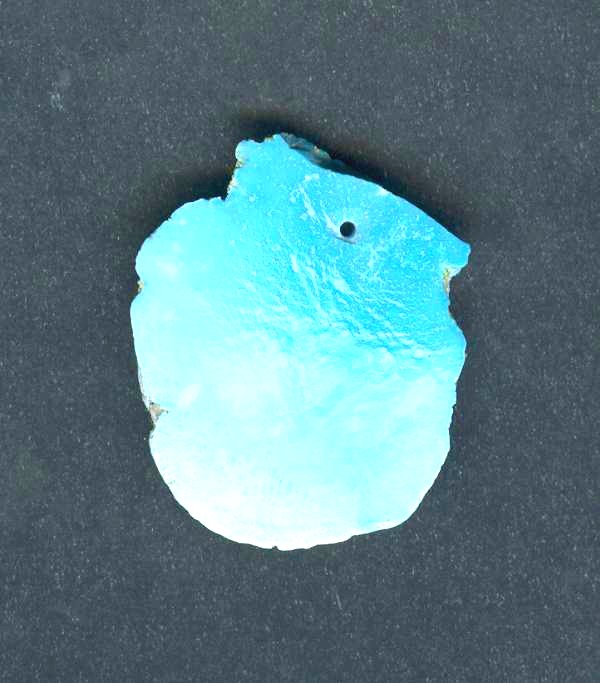
Sonoran Leaves are a specially fired glass that is made into the shape of leaves in different sizes for use in pendants and earrings. Boro glass is a particular type of glass, better known under the brand name of Pyrex. It was first developed in the late 19th century and was used primarily for scientific glass due to its strength and durability. Artists have started to use boro glass for bead making even though it is a very hard glass and requires high heat to form a bead. Boro glass has a very distinctive range of colors from varions other minerals or impurities, often much more vibrant than the softer European glass. Sonoran Leaf pieces are made one at a time, in a flame. Because they are made by hand there may be slight variations in color from one batch to another. Do not confuse these Sonoran Leaves with other types of poured or fused glass leave made in bulk.


Cat-eye beads and colored crystals were also used in this set.


A second set of earrings using Sonoran Leaf dangles to match the center highlight of the necklace is also available.

Thursday, June 2, 2011

Jewelry Set - Summr Sparkle !

A Summer day can end with a beautiful red sunset and at the same time have the white of lights and stars combine in a burst of color.

.

SOLD This necklace is constructed wth a white Agate center stone with red Carnelian discs and white carved Coral enhanced with silver melon accents ad crystals. This 18 inch necklace is finished with a silver Toggle clasp. Matching French Hook earrings complete the set.

.

Carnelian (also spelled cornelian) is a brownish-red mineral which is commonly used as a semi-precious gemstone. Similar to Carnelian is Sard, which is generally harder and darker. The difference is not rigidly defined, and the two names are often used interchangeably. Both Crnelian and Sard are varieties of the silica mineral Chalcedony colored by impurities of iron oxide. The color can vary greatly, ranging from pale orange to an intense almost-black coloration. Extensive beds of Carnelian are found at Rajpipa in State of Gujarat in India and have been dug since at least about 1500 to provide raw material for the region's extensive lapidary industry.

.

White Agate more commonly referred to as Greek agate is a name given to pale white to light tan colored agate found in Sicily dating back to 400 B.C. The Greeks used it for making jewelry and beads. Even though the stone had been around for centuries and was known to both the Sumerians and the Egyptians, both who used the gem for decoration and for playing important parts in their religious ceremonies, any agate of this white color from Sicily, once an ancient Greek colony, is called Greek Agate.

.

Corals are marine organisms typically living in compact colonies of many identical individual "polyps. The group includes the important reef builders that inhabit tropical oceans, which secret calcium carbonate to form a hard skeleton. Coral tissues become colorless as they reveal the white of their calcium carbonate skeletons, an event known as coral bleaching and most corals are found in the white form. Other colorations also exist depending on chemicals and algie in the water in which they grew. Corals are highly sensitive to environmental changes. Scientists have predicted that over 50% of the world's coral reefsmay be destroyed by 2030; and as a result most nations protect them through environmental laws, especially the black corals. To overcome the shortages for jewelry and other ornamental uses, coral farms are now being developed and used for non-ocenaic purposes.


Additional info ----- Currently many species of Corals, especially reef building varities, are being considered "endangered" and are under consideration for banning for use in jewelry and other decorative uses, following in the footsteps of Ivory. Sponge Coral, however, is not on the endangered species list, plus it is a sustainable product. Sponge Coral is a farmed product and thus is not removed from the Coral Reef and does not cause the environmental damage associated with traditional corals.


.


Crystals were also used in this set.


.

Thursday, October 7, 2010

GEMSTONE JEWELRY - new design using Sonoran Leaves !

We are returning to the Glass, Crystals and Gemstones combination. Not a combination one would automatically think of, but when the glass is cut or formed correctly, and the crystals and gemstones have been cut and polished also, you have a unique combination for the “discerning” jewelry wearer. Come and see this design and others at the Deep in the Arts of Texas Show at the Live Oak Civic Center, Sat Oct 9th, 9 to 5
.
This unique design incorporates reddish Sonoran Glass leaves in two sizes. Twelve large Agate nuggets and four feceted rondels combine with Carnelian beads to complete the necklace. Crystals are interspirsed as accents. A silver plated hook and loop clasp completes the necklace. Matching Carnelian and clear crystals dange from French Hook earrings to complete the set.
.
Sonoran Leaves are a specially fired glass that is made into the shape of leaves in different sizes for use in pendants and earrings. Boro glass is a particular type of glass, better known under the brand name of Pyrex. It was first developed in the late 19th century and was used primarily for scientific glass due to its strength and durability. Artists have started to use boro glass for bead making even though it is a very hard glass and requires high heat to form a bead. Boro glass has a very distinctive range of colors from varions other minerals or impurities, often much more vibrant than the softer European glass. Sonoran Leaf pieces are made one at a time, in a flame. Because they are made by hand there may be slight variations in color from one batch to another. Do not confuse these Sonoran Leaves with other types of poured or fused glass leaves made in bulk and sold at craft stores and shows.
.
Agate - No gemstone is more creatively striped by nature than agate. This distinct and dramatically banded variety of Quartz comes in layers. Agate composition varies greatly and can be of many colors. Each individual Agate forms by filling a cavity in a host rock. As a result, Agate often is found as a round nodule with concentric bands like the rings of a tree trunk. It is said to be named for the place it first was found along the River Achates (now called the River Drillo) in Sicily.
.
Carnelian is an A-grade Agate. What a lot of people call "true carnelian" is the fiery red/orange color, and in theory, Carnelian is naturally that color. However, most of that fiery red/orange "true" Carnelian is heat-treated in secret before it reaches the gemstone-cutting factory. This apparently has been a secret for thousands of years; each part of the world thought everyone else's Carnelian was naturally red, but they were heating theirs, too. When held against the light, the color-treated Carnelian shows its color in stripes, while natural Carnelian shows a cloudy distribution of color. The name Carnelian is said to be derived from the Latin word 'carnis' ("flesh") due to its color. Deposits of Carnelian are found in Brazil, India, Australia, Russia, Madagascar, South Africa, Uruguay and the U.S.A.
.
.

Sunday, August 29, 2010

GEMSTONE JEWELRY - Agate & Jasper or Agate or Jasper ! !

Sometimes we have an Agate, sometimes we have a Jasper, sometimes we have a name and not sure which exact gemstone we have. Many times we try to find an "easy answer" where there isn't one. The basic difference between Agate and Jasper is a structural one - at the microscopic level. It has nothing to do with the color or pattern. Agate is composed of microscopic 'fibers' of crystalline quartz. Jasper is composed of microscopic 'grains' of crystalline quartz. Jasper has less-regular patterns and is less defined than the Agates. Another subtle difference between the two is that Agates tend to be translucent (or at least contain translucent bands), while Jaspers are generally opaque.
.
This is a warm and comfortable design that incorporates Autumn colors - orange brown, red and rust. By using a colorful Agate/Jasper pendant, Breciated Jasper carved twists, Carnelian rounds and Antique Brass beads with crystal highlights, we make a smooth transition from the warmth of Summer to the coolness of Autumn. Matching French Hook earrings complete the set.
.
Agate - No gemstone is more creatively striped by nature than agate. This distinct and dramatically banded variety of Quartz comes in layers. Agate composition varies greatly and can be of many colors. Each individual Agate forms by filling a cavity in a host rock. As a result, Agate often is found as a round nodule with concentric bands like the rings of a tree trunk. It is said to be named for the place it first was found along the River Achates (now called the River Drillo) in Sicily.
.
Jasper coming from Greek origin, "iaspis", means "spotted stone." This form of semiprecious microcrystalline Quartz is usually red, brown or green. Its patterns are much less regular and defined than those of its sister variety, Agate. Although the term Jasper is often applied to unidentified stones, true Jaspers are metamorphic rocks. Jasper derives its colorful patterns from other minerals present, and is often named according to its pattern. It has a dull luster but takes a fine polish, and its hardness and other physical properties are those of Quartz. Jasper is often sealed with petroleum products. Its polish might wash away in water, so clean with a soft, dry cloth.
.
Carnelian is an A-grade Agate. What a lot of people call "true carnelian" is the fiery red/orange color, and in theory, Carnelian is naturally that color. However, most of that fiery red/orange "true" Carnelian is heat-treated in secret before it reaches the gemstone-cutting factory. This apparently has been a secret for thousands of years; each part of the world thought everyone else's Carnelian was naturally red, but they were heating theirs, too. When held against the light, the color-treated Carnelian shows its color in stripes, while natural Carnelian shows a cloudy distribution of color. The name Carnelian is said to be derived from the Latin word 'carnis' ("flesh") due to its color. Deposits of Carnelian are found in Brazil, India, Australia, Russia, Madagascar, South Africa, Uruguay and the U.S.A.
.
.

Wednesday, August 18, 2010

GEMSTONE JEWELRY - a substitute for Turquoise


For ages, due to the high price of certain gemstones, cheaper substitutes have been used to provide a like end result. Howlite, colored as turquoise is one such substitute. You cannot call Howlite a fake however, because it is a real gemstone in its own right. It just so happens that when colored blue, blue-green or green that many times it mimics real Turquoise, right down to the veining. Just watch out for sellers who do not advertise the fact that they are selling this turquoise colored Howlite, and not real Turquoise.
.
This necklace set combines turquoise colored Howlite half-moon beads, red colored Howlite rounds, Carnelian barrels and stabilized Arizona Turquoise discs. A 3 inch antique copper extender combines with a lobster clasp for closure. French hook dangle earrings complete the set.
.
Howlite, named for its discoverer Henry How is one of those minerals that is more famous for imitating another mineral than being used for itself. In most cases the other mineral is Turquoise, a phosphate gemstone. Although natural Howlite is always white or gray, it can accept dyes fairly easily and be dyed a turquoise blue. The look of turquoise is so good that dishonest dealers have been unfortunately successful at this hoax. In more honest circumstances, dyed howlite is an affordable substitute for turquoise carvings, beads, polished stones and cabochons. It accepts a nice polish and its porcelaneous luster is attractive and enhances even undyed beads and carvings. Unfortunately it has low hardness, but it still has a distinct toughness. California is the source for most all of the howlite trade where nodules of up to one hundred pounds have been found. In addition to the famous turquoise colored Howlite is dyed, it also can become a very bright red color to mimic red coral, or any other color in the rainbow.
.
Stabilized turquoise - Turquoise that is soft or normally referred to as "chalk" Turquoise is infused with a clear epoxy resin. This resin, under pressure, is absorbed into the rock, which permanently hardens the rock and deepens the color. Unlike the collectible natural Turquoise which deepens in color over time by gradually absorbing oils from the skin as it is worn, the colors in stabilized Turquoise are permanent. Most of the Turquoise on the market today is stabilized and should not cost as much as natural Turquoise. Stabilized turquoise can be very beautiful, and is a good buy. Because of it's hardness and consistant color, stabilized Turquoise wears much better in Jewelry.
.
Carnelian (also spelled cornelian) is a reddish-brown mineral which is commonly used as a semi-precious gemstone. Similar to Carnelian is Sard, which is generally harder and darker. The difference between the two is not rigidly defined, and thus the two names are often used interchangeably. Both Carnelian and Sard are varieties of the silica mineral called Chalcedony and are colored red by impurities of iron oxide. The color can vary greatly, ranging from pale orange to an intense almost-black coloration.
.
.

Friday, August 13, 2010

GEMSTONE JEWELRY - Substitute for a well known Gemstone !

Over the years, due to its popularity, the price paid for Turquoise keeps going higher and higher and in many cases the availability is also becoming less and less as more mining areas are depleted and have been closed. Turquoise is normally divided into four classes, and priced accordingly.
.
Natural - This comes directly from the mine. It is cut shaped and polished and set into jewelry. It has no man made treatment or additives other than a polishing compound that adds to its luster. As seen to the right, a raw piece of Sleeping Beauty Turquoise from Arizona, can be beautiful with very little polishing. Most stones in this state are very close to gem quality. The coloration of natural Turquoise can darken as oils from the skin work its way into the stone over the years, especially of not properly cleaned.
Stabilized – This is a natural turquoise usually in nugget form, but does not hold a luster. It is submerged into a stabilizing compound and dried, cut and prepared for jewelry. The turquoise has not been altered. The pores of the stone have been filled with a clear resin that makes the stone usable. This process allows for diversity of shapes and possibilities in jewelry making. Color Stabilized stones are considered altered and sometimes color has been added in this process. This in not necessarily bad, but it has less value than a piece that is naturally colored. Stabilized Turquoise usually does not change color with wear.
Treated - This form of color enhancement has been used for thousands of years. It is done as discussed earlier by submerging Turquoise stones into animal fat or vegetable oil and later air dried. Normally the color will not last very long. A new variety on the market, called "Motaska" and "Majave" Stone is much more stable and retains its color as well as being infused with gold, silver and copper.
Fake and Synthetic – Ceramics, bone, celluloid and plastic are used to imitate turquoise. Synthetic turquoise has a very natural matrix that is produced by placing stones in the synthetic “batter” .
.
In addition to these four classes , we also have some natural gemstones that can be colored to look like Turquoise. The best known is Howlite, but some other common Turquoise colored gemstones are Magnesite and Ivoryite. Howlite, especially, is known for being colored in many colors other than Turquoise.
.
This design uses turquoise colored Magnesite barrels in line with two sizes of Carnelian round and flat beads with Sardonyx barrels. The set is completed with silver French Hook earrings with a dangle of Carnelian, Sardonyx and stabilized Turquoise flats.
.
Magnesite is a compound that substitutes iron for magnesium with a complete solution series with siderite. Dolomite is almost indistinguishable from magnesite. Magnesite is normally stablized and color shot except for that which is left white or ivory in color as a substitute for Ivory. Many vendors sell Magnesite as stabilized Turquoise. Also the famous Wild Horse Turquoise sold throughout the Southwest is predominately Magnesite dug from the same mines as Turquoise and many times has Turquoise as well as other minerals mixed through it to make for the beautiful designs.
.
Stabilized turquoise - Turquoise that is soft or normally referred to as "chalk" Turquoise is infused with a clear epoxy resin. This resin, under pressure, is absorbed into the rock, which permanently hardens the rock and deepens the color. Unlike the collectible natural tTrquoise which deepens in color over time by gradually absorbing oils from the skin as it is worn, the colors in stabilized Turquoise are permanent. Most of the Turquoise on the market today is stabilized and should not cost as much as natural Turquoise. Stabilized turquoise can be very beautiful, and is a good buy. Because of it's hardness and consistant color, stabilized Turquoise wears much better in Jewelry.
.
Sardonyx is a variant of Onyx or Agate in which the colored bands are Sard in shades of red rather than black. Pure black Onyx, which is truely a died black Agate, is more common and perhaps the most famous variety, but not as common as natural Onyx with its banded colors of browns, whites and black.
.
Carnelian (also spelled cornelian) is a reddish-brown mineral which is commonly used as a semi-precious gemstone. Similar to Carnelian is Sard, which is generally harder and darker. The difference between the two is not rigidly defined, and thus the two names are often used interchangeably. Both Carnelian and Sard are varieties of the silica mineral called Chalcedony and are colored red by impurities of iron oxide. The color can vary greatly, ranging from pale orange to an intense almost-black coloration.
.
.

Wednesday, August 4, 2010

GEMSTONE JEWELRY - Multiple Strands !

Sometimes it is necessary to use multiple strands of beads to help highlight a special pendant or for that special look which makes for an unusual necklace.
.
Here we have a Red Canyon Agate triangular pendant from the Sedona area of Arizona matched up with three strands of gold victorian seed-beads, Carnelian block beads and black Agate (Onyx) beads that taper into a single strand of the same Carnelian block beads and Black Agate (Onyx) round beads. The piece is futher highlighted with hammered silver connectors and a silver toggle clasp to complete the necklace. A matching memory wire bracelet and French Hook earrings complete the set.
.
Agate is a semi precious gemstone belonging to the Chalcedony family and is found in a wide variety of colors and textures all over the world. There is no gemstone which is more creatively striped by Nature than the Agate. The stone is said to receive its name from Theophrastus, a Greek philosopher and naturalist, who discovered the stone along the shore line of the River Achates. This particular Agate comes from Red Canyon, one of the many canyons hid among the red-mountains around Sedona, Arizona.

.
Carnelian (also spelled cornelian) is a reddish-brown mineral which is commonly used as a semi-precious gemstone. Similar to Carnelian is Sard, which is generally harder and darker. The difference between the two is not rigidly defined, and thus the two names are often used interchangeably. Both Carnelian and Sard are varieties of the silica mineral called Chalcedony and are colored red by impurities of iron oxide. The color can vary greatly, ranging from pale orange to an intense almost-black coloration.
.
Black Agate (Onyx) which is truely a died black Agate, is more common and perhaps the most famous variety, but not as common as natural Onyx. Onyx is a crypyocrystalline form of Quartz. The colors of its bands range from white to almost every color (save some shades, such as purple or blue). Specimens of Onyx contain bands of colors of white, tan, and brown. As stated, the pure black form which most people know as Onyx, is not a naturally occuring variety. Black Agate or poorly colored Onyx is heated and dyed black to come up with the pure black form so well liked within the jewelry industry.
.
.

Thursday, July 29, 2010

GEMSTONE JEWELRY - Go For The Look !


Many times using the colors from a highlight bead or pendant brings a necklace together as a single unit.
.
This gemstone set uses a striped Sardonyx gemstone which was end drilled as the highlight of the necklace. Polished Coral rounds combines with Carnelian discs and rounds with silver highlights and toggle clasp complete the necklace. French hook earrings using the Carnelian rounds and disks with silver highlights complete the set.
.
Sardonyx is a variant of Onyx or Agate in which the colored bands are Sard in shades of red rather than black. Pure black Onyx, which is truely a died black Agate, is more common and perhaps the most famous variety, but not as common as natural Onyx with its banded colors of browns, whites and black.
.
Carnelian (also spelled cornelian) is a reddish-brown mineral which is commonly used as a semi-precious gemstone. Similar to Carnelian is Sard, which is generally harder and darker. The difference between the two is not rigidly defined, and thus the two names are often used interchangeably. Both Carnelian and Sard are varieties of the silica mineral called Chalcedony and are colored red by impurities of iron oxide. The color can vary greatly, ranging from pale orange to an intense almost-black coloration.
.
Corals are marine organisms typically living in compact colonies of many identical individual "polyps". The group includes the important reef builders that inhabit tropical oceans, which secrete calcium carbonate to form a hard skeleton which is used in the production of jewelry.
.
.